Securing a professional pest control service Denver homeowners rely on establishes an immediate protective perimeter against invasive Front Range insects and foraging winter rodents. Local environmental conditions, such as dry clay soils, rapid freeze-thaw cycles along the South Platte River basin, and high-altitude weather shifts, drive pests directly into residential crawl spaces, brick foundations, and warm attics.

A pest control service in Denver is a specialized structural inspection, targeted eradication, and seasonal exclusion protocol designed to eliminate active rodent and insect infestations from Front Range properties.
Every service reflects the same meticulous attention to detail, whether it's a single job or a larger pest control service project across Denver.
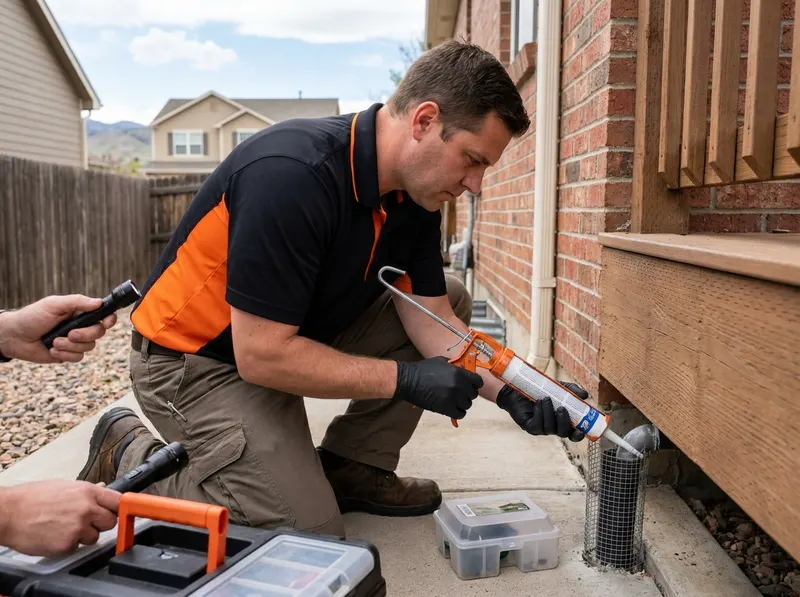
Targeted indoor mechanical trapping combined with exterior structural exclusion seals entry points down to 1/4 inch, blocking house mice and deer mice from crawl spaces, wall voids, and attics. Technicians execute complete structural inspections of perimeter brick lines, stone foundations, pipe penetrations, and soffit vents, outfitting structural vulnerabilities with 1/4-inch galvanized hardware cloth and copper wire mesh to prevent gnawing access. Interior remediation deploys concealed snap traps and tamper-resistant monitoring units across baseline runs, utility closets, and suspended joists. Dropping removal, localized sanitation of urine-marked nesting sites, and insulation disturbance evaluations ensure structural and biological recovery throughout finished basements and attics.
Get a quote →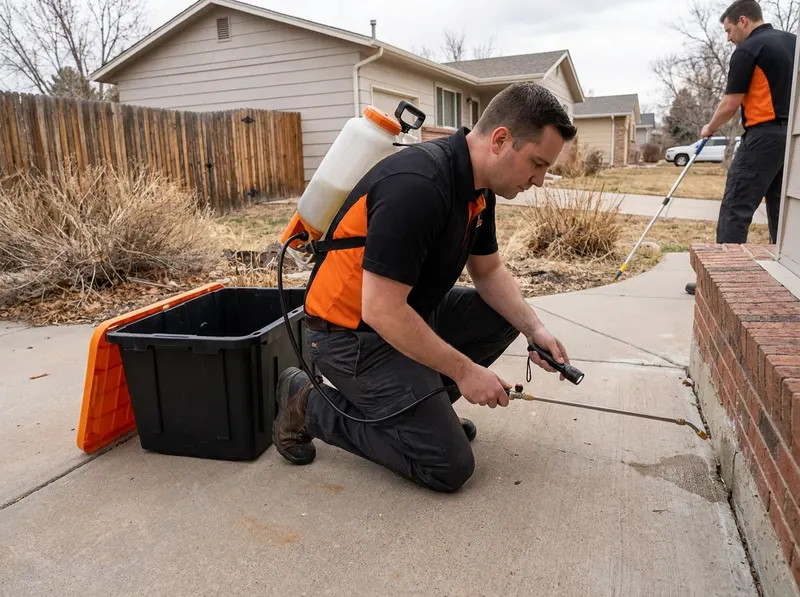
Colony-level eradication for pavement ants, carpenter ants, and odorous house ants utilizing slow-acting non-repellent transfer baits and perimeter crack-and-crevice barrier treatments. Because topical pyrethroids can cause odorous house ants to bud into satellite colonies, targeted liquid or gel formulations rely on imidacloprid or fipronil transfer chemistry, allowing foraging worker ants to carry the active ingredient directly into subterranean nesting chambers to neutralize the reproductive queen. Technicians treat external foundation interfaces, patio slab joints, window headers, and moist subterranean soil along irrigation lines, pairing chemical applications with physical silicone caulking around window frames and plumbing chases to eliminate recurring pheromone trails.
Get a quote →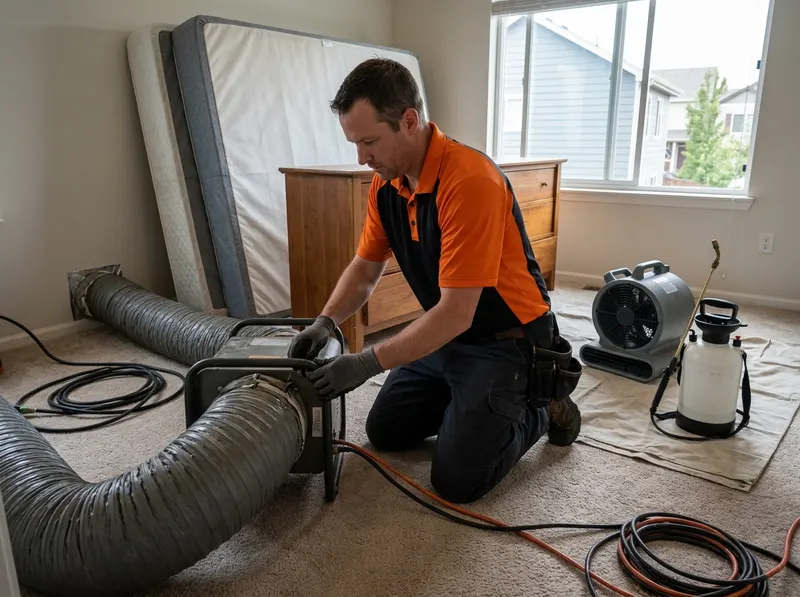
Whole-room thermal treatment heating infested interior zones between 120°F and 135°F for sustained intervals, supplemented by residual contact applications to eliminate nymphs, adults, and eggs. High-output electric or indirect-fired heaters paired with industrial axial air movers circulate forced heat across wall voids, box springs, mattress seams, and picture moldings to penetrate deep harborage areas where traditional chemicals cannot reach. Follow-up treatments apply amorphous silica dust or microencapsulated liquid residuals beneath baseboards and electrical outlets, delivering continuous contact protection against hidden nymphs for up to 90 days following thermal knockdown.
Get a quote →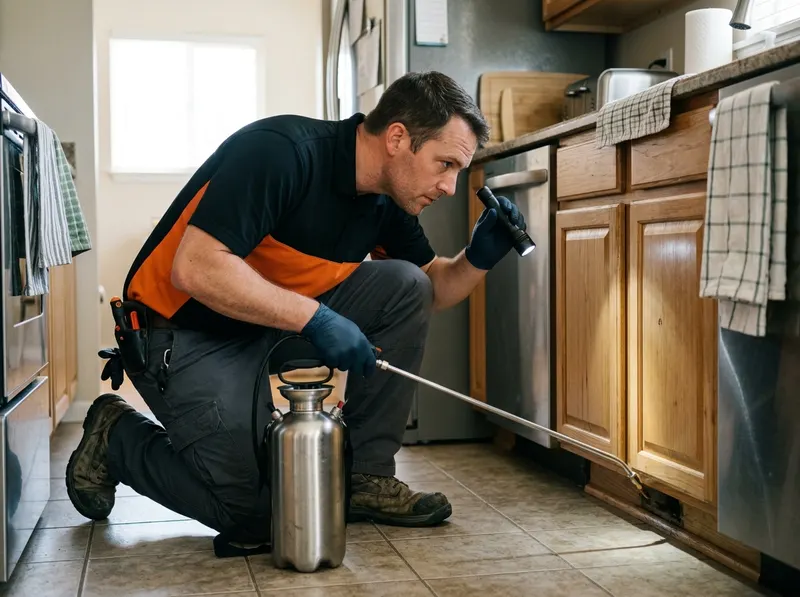
Systemic gel bait matrixing, insect growth regulators (IGRs), and precision void dusting designed to stop German and American cockroach breeding cycles in residential kitchens and plumbing chases. German cockroaches reproduce rapidly, with egg cases carrying 30 to 48 nymphs, demanding intensive bait rotation to avoid behavioral bait aversion. Technicians apply targeted micro-dots of abamectin or dinotefuran bait matrices behind electrical appliance motors, under counter undermount sinks, and along mechanical service lines. Wall voids are charged with non-repellent boric acid or pyrethroid dust, while liquid insect growth regulators halt the molting cycle to prevent juvenile nymphs from reaching sexual maturity.
Get a quote →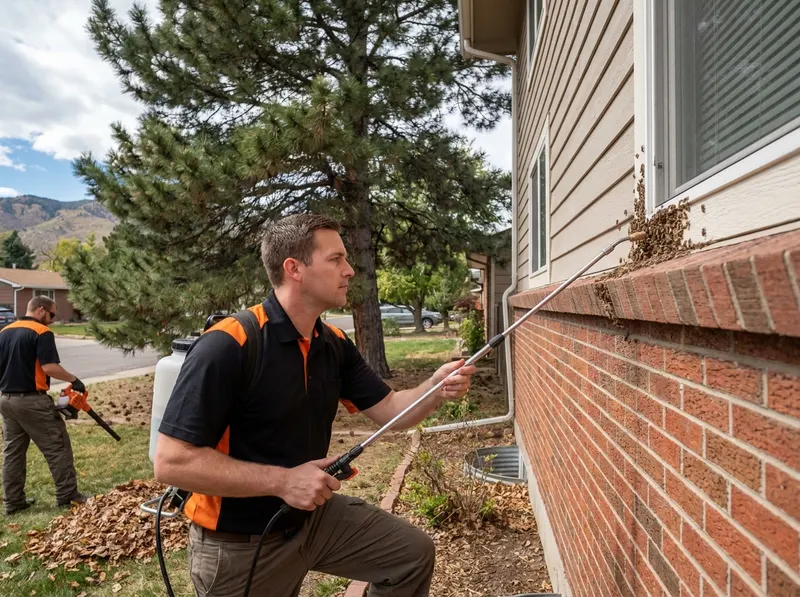
Exterior structural barrier sprays applied to south- and west-facing siding, window sashes, and rooflines prior to peak spring migrations and autumn overwintering periods. In early summer, army cutworm larvae transform into adult miller moths, navigating west toward the Rocky Mountains and sheltering in porch canopies, attics, and door thresholds. In autumn, aggregations of boxelder bugs collect by the thousands on sunny brick facades before squeezing through exterior expansion joints. High-pressure exterior barrier treatments deposit weather-resistant microencapsulated suspensions along soffits, window headers, crawl space vents, and siding joints to repel flying insects before they access indoor living spaces.
Get a quote →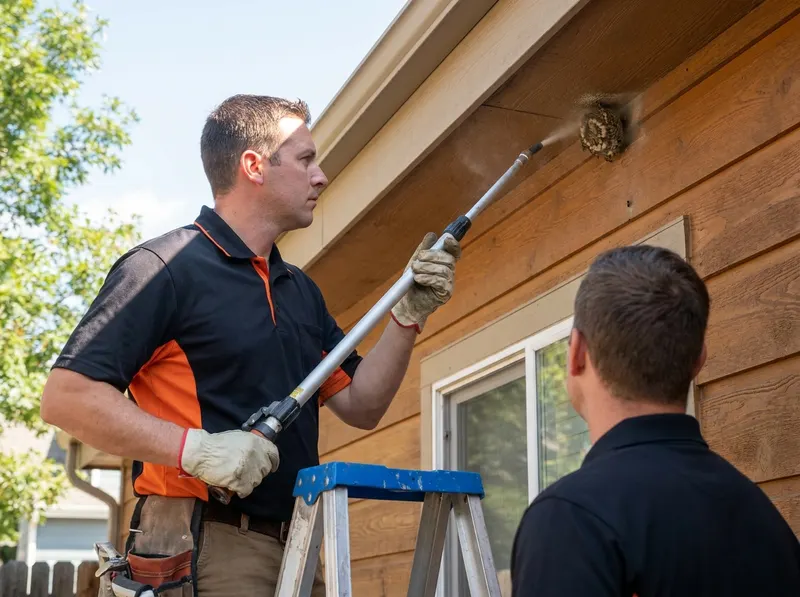
Physical knockdown, localized aerosol void injection, and nest removal for bald-faced hornets, paper wasps, and yellow jackets anchored beneath eaves, decks, and structural overhangs. Stinging insect colonies expand aggressively from mid-summer through late autumn, establishing spherical paper nests or underground subterranean burrows near residential pathways. Technicians deploy calibrated freezing aerosol knockdowns and residual pyrethroid dust injections directly into nest entry apertures, terminating defensive sentry wasps before mechanically scraping the nest structure from roof brackets, dormers, and structural decking. High-reach equipment allows safe neutralization of elevated nests without damage to gutters or wood fascia.
Get a quote →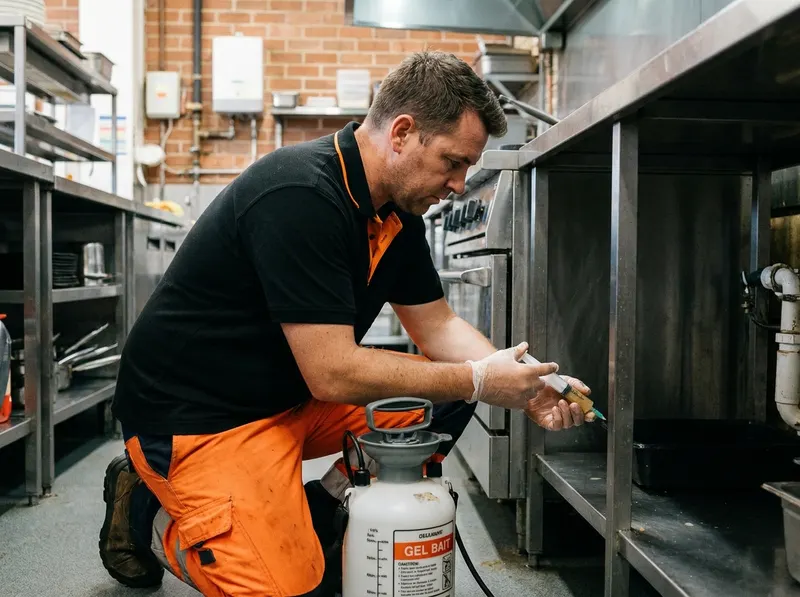
Documented integrated pest management systems, commercial kitchen drain treatments, and discrete rodent bait station networks designed for Denver restaurants, warehouses, and multi-family properties. Programs include comprehensive regulatory reporting, hazard analysis critical control point (HACCP) alignment, and digital logbook documentation. Routine service intervals evaluate interior dock seals, floor drain microbial buildups, drop-ceiling utility channels, and food prep sanitation lines, deploying low-odor micro-injections, drain bioremediation foams, and exterior tamper-resistant bait blocks anchored to concrete foundations to prevent urban rodent foraging.
Get a quote →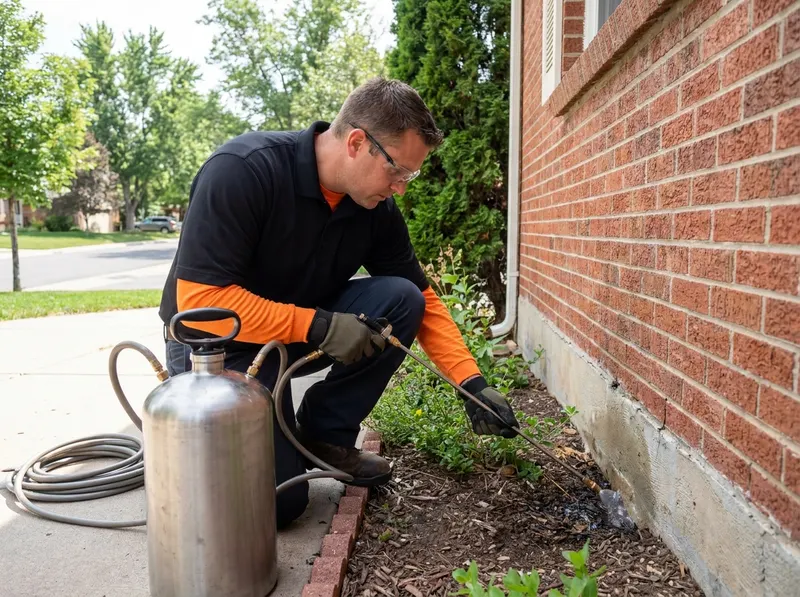
Comprehensive indoor baseboard treatments and perimeter foundation dusting to control predatory western black widows, yellow sac spiders, and centipedes hunting within ground-level entryways. Denver's dry regional climate drives hunting arachnids into crawl spaces, subterranean utility basins, unfinished basements, and window wells. Technicians conduct physical web de-webbing using telescopic extension poles, apply residual wettable powder treatments across exterior perimeter stem walls up to 3 feet high, and introduce micro-crystalline dust formulations into hollow concrete block voids, window wells, and subfloor access points.
Get a quote →You get a firm, itemized quote for your pest control service before any work begins, no surprises, no pressure.
Careful prep, tidy work, and a full cleanup when we are done. We treat your home and belongings like our own.
The same trusted, background-checked team from the first call to the final check.
Selecting an appropriate treatment protocol depends directly on pest biology, harborage depth, and property construction across Denver County. If property owners observe seasonal exterior surface aggregations like boxelder bugs sunning on south-facing brick or pavement ants mining sand along flagstone patios, a microencapsulated exterior liquid barrier combined with mechanical silicone-polyurethane caulking is appropriate, costing between $300 and $450. If wood-destroying or high-reproduction structural pests like carpenter ants, German cockroaches, or bed bugs establish indoor harborage inside wall voids, behind subfloor kickplates, or within finished baseboards, targeted systemic baiting or full-room thermal heating provides reliable eradication.
The operational trade-off is higher initial preparation: residents must bag and launder all textiles at 120°F, pull furniture 12 inches away from perimeter walls, and vacate premises for 4 to 8 hours during active heating or aerosol applications, with multi-room remediation ranging from $450 to $1,800. For subterranean rodent activity involving Norway rats, roof rats, or house mice, setting standalone exterior rodenticide bait boxes leaves entry pathways unaddressed. Permanent structural exclusion using 1/4-inch galvanized steel hardware cloth, copper wire mesh, and heavy metal escutcheon plates across foundation weep holes, crawl space louvers, and utility line penetrations stops seasonal re-entry permanently.
Conversely, relying strictly on interior snap traps or glue boards removes visible juvenile mice within 24 to 72 hours but requires continuous weekly monitoring and resetting without preventing foraging outdoor field mice from penetrating basement sill plates during the first hard October frost.
Every project gets a firm, written price after a free on-site visit. Ranges below for orientation.
Tell us about your pest control service job and we'll send a clear, written quote, usually the same day. Or just call and talk to a real Denver pro.
(720) 973-3817
Properties located near major metropolitan tree canopies and green spaces such as City Park, Cheesman Park, and the Denver Botanic Gardens encounter continuous pest pressures due to mature root systems, heavy decorative mulch beds, and aged underground municipal infrastructure. In the historic brick bungalows, Queen Anne homes, and Denver squares throughout Baker, Washington Park, and Capitol Hill, foundation settling in 90- to 130-year-old masonry creates micro-fractures in sandstone, rubble stone, and unreinforced mortar joints. Field mice and deer mice exploit these exact 1/4-inch thermal voids every October as night temperatures dip below freezing along the Front Range corridor. In high-density districts like Five Points, Highland, and Sloan's Lake, historic utility upgrades and plumbing retrofits frequently leave uncapped annular spaces around modern PVC water conduits and subfloor electrical conduits, creating direct highway conduits for German cockroaches and odorous house ants. Additionally, Denver's high-elevation atmosphere at 5,280 feet generates intense ultraviolet radiation and sudden 40-degree daytime-to-nighttime temperature fluctuations. These rapid environmental shifts break down standard residential pesticide sprays within days; effective exterior perimeter pest control in Denver County requires specialized, microencapsulated chemical suspensions, broad-spectrum wettable powders, and physical copper-mesh structural barriers designed to survive intense solar exposure, driving spring rain along Colfax Avenue, and hard winter ground freezes.
Free estimates for Denver & the surrounding area.
 Rasteno Pest Protection