Denver homes experience significant seasonal pest movements caused by semi-arid Front Range conditions. During dry late-summer stretches and sharp autumn temperature drops, crawling pests migrate from exterior turf…
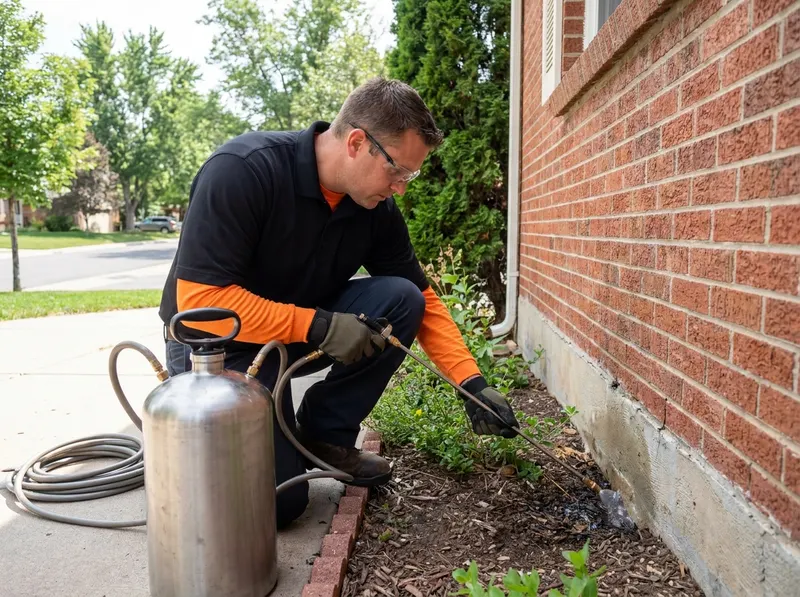
Denver homes experience significant seasonal pest movements caused by semi-arid Front Range conditions. During dry late-summer stretches and sharp autumn temperature drops, crawling pests migrate from exterior turf toward heated foundations. In historic brick and stone foundation neighborhoods like Capitol Hill, Baker, and Five Points, mortar joints and sandstone footings develop microscopic settling fractures that invite western black widows, wolf spiders, and common centipedes. Modern concrete stem walls found in newer developments throughout Sloan's Lake and Highland present smooth surfaces where spiders establish webbing along weep screeds and utility line penetrations. Applying an exterior micro-encapsulated liquid band stops these structural migrations, keeping living areas protected from invasive pests.
Selecting an exterior liquid barrier application replaces the need for reactive interior broad-spectrum sprays. Interior aerosol treatments only impact the visible pests already residing inside living quarters, failing to eliminate the exterior harborage zones where populations originate. An exterior barrier establishes a treated perimeter band measuring 3 feet up the vertical masonry and 6 feet out across adjacent ground beds. The mechanical trade-off rests in exposure: outdoor residual barriers encounter UV radiation, alkaline Denver soils, and sprinkler systems, meaning chemical longevity typically spans 60 to 90 days. For sustained protection against persistent infestations, property owners pair perimeter applications with targeted physical exclusion such as door sweep replacements and mortar patching.
Properties in Washington Park, Park Hill, Montclair, and Cherry Creek often feature dense perimeter foliage, mulch landscaping, and heavy flagstone walkways that act as primary harborages for woodlice, earwigs, and ground-hunting spiders. Moisture from landscape irrigation draws crawling insects straight to basement egress window wells, which act as collection points beneath the foundation grade. The exterior barrier application targets these subterranean recesses directly, treating gravel beds, window frames, and exterior plumbing entry points. The minimum on-site service charge is $300, which covers standard detached single-family residential perimeters up to 2,000 square feet.
Every job gets a firm, written price after a free on-site visit.
Tell us about your spider and crawling insect barrier application job in Denver and we'll send a clear, written quote, usually the same day.
 Rasteno Pest Protection